

An electrical maintenance checklist covers visual inspections, panel checks and safety device testing to prevent hazards before they turn into failures.
The goal is simple. Many electrical fires and outages trace back to something that was visible weeks or months earlier, such as a warm breaker, a loose outlet or a battery that was never replaced.
This checklist breaks the work into categories, explains how often to complete each task, and identifies which items are safe to check yourself versus which ones belong to a licensed residential electrician.
Quick answer for an electrical maintenance checklist
A complete electrical maintenance checklist includes three core areas: the service panel and breakers, safety devices such as GFCIs and smoke alarms, and the outlets, cords and wiring throughout the property.
Panel checks look for rust, heat, unusual smells and breakers that trip frequently. Safety device checks confirm that GFCIs, AFCIs and alarms respond when tested, not just that they are installed.
Outlet and wiring checks look for cracked cords, loose plugs and any outlet that sparks or feels warm to the touch. These conditions are among the most common electrical issues in Orlando properties.
Why this checklist matters more in Central Florida
Orlando properties run air conditioning for most of the year, which means circuits and panels carry a heavier load than in milder climates for a much longer period.
Humidity speeds up corrosion inside panels, outdoor outlets and junction boxes, which is one reason a connection that looks fine in a dry climate can loosen sooner in Florida.
Storm season adds another factor. Surge activity from lightning and grid restoration after outages puts extra stress on panels, surge protectors and anything plugged in at the time. Property owners can review Isisma Electric’s Central Florida service areas to confirm availability at their address.
How often to run each check
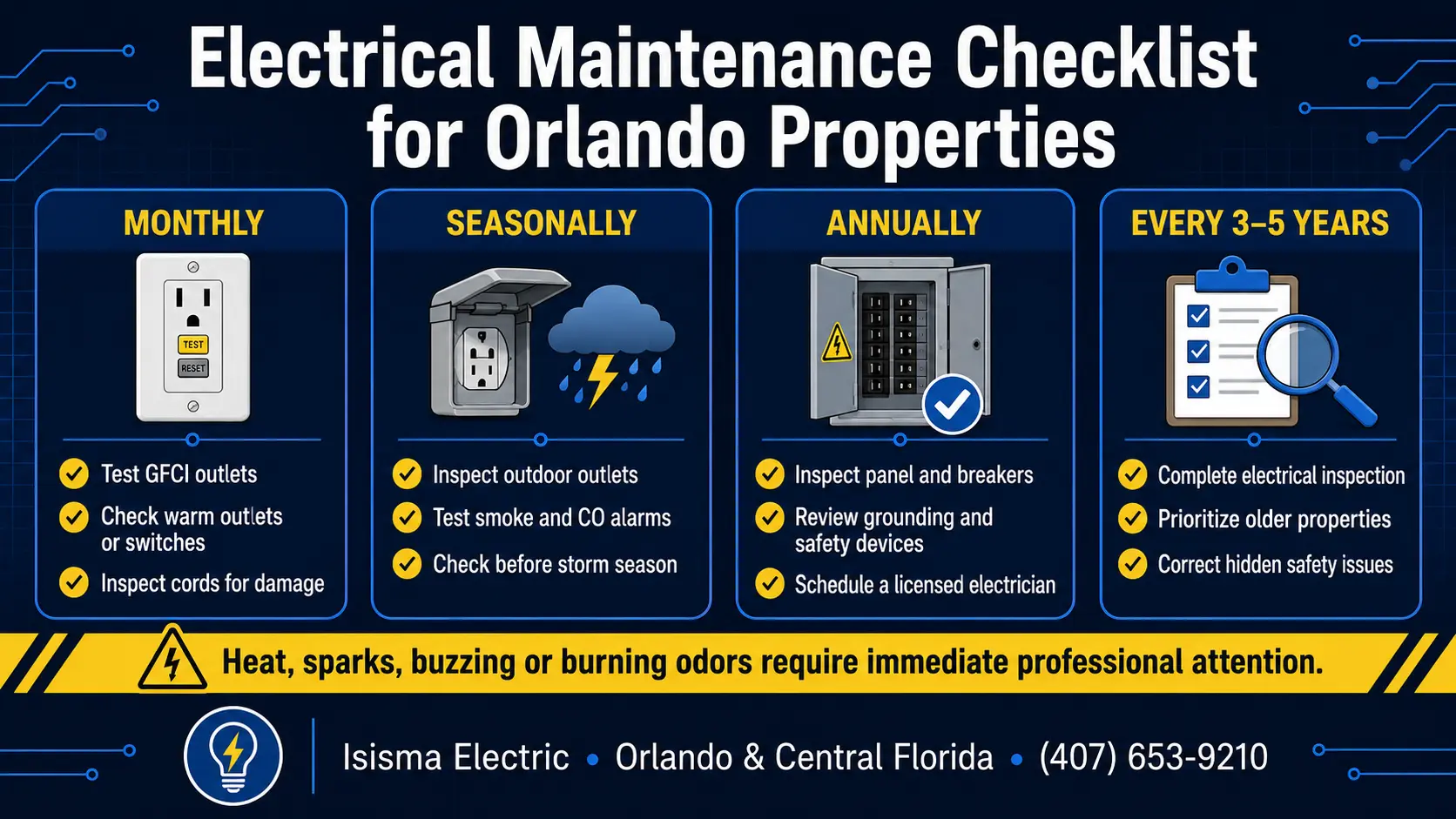
Not every item on an electrical maintenance checklist needs the same frequency. Spreading tasks out by cadence keeps the list realistic instead of overwhelming.
Monthly
Test GFCI outlets and check for any outlet, switch or cord that feels warm or shows visible damage.
Seasonally
Inspect outdoor outlets and fixtures before summer storm season, and test smoke and carbon monoxide alarms when clocks change.
Annually
Have the service panel, breakers and grounding system checked by a licensed electrician, and review your power bill for unexplained increases.
Every three to five years
Schedule a complete electrical inspection, especially for homes over 15 years old or any property that has never had one.
Panels and breakers
The service panel is one of the most important items on this checklist, since many electrical problems in a property eventually connect back to it.
Look for rust, water staining or a burnt smell near the panel, and confirm every breaker and switch is labeled clearly for the circuit it controls.
Note any breaker that feels warm to the touch or trips more than once in a short period, since both are warning signs rather than normal behavior.
If your panel shows any of these signs, treat it as a call to a licensed electrician rather than a wait-and-see item. Heat, buzzing, smoke or a burning smell may require 24/7 emergency electrical service.
Safety devices
Safety devices only protect a property if they are working, which is why testing them matters more than simply confirming they exist.
Press the test and reset buttons on every GFCI outlet in kitchens, bathrooms, garages and outdoor areas, and confirm that the outlet cuts power when tested.
Check that AFCI-protected circuits operate normally, since these devices detect arcing faults that GFCIs are not designed to detect.
Test every smoke and carbon monoxide alarm and replace batteries on a fixed schedule, even if the alarm still appears to be working.
Outlets, cords and wiring
This is the part of the checklist most homeowners can walk through in under an hour, room by room.
Look for cords that are cracked, frayed or warm, and replace anything that shows damage rather than covering it with tape.
Check that outlets hold a plug firmly and do not spark, feel loose or become warm when something is plugged in.
Avoid overloading a single outlet or daisy-chaining power strips, since this is a common cause of overheated connections.
Lighting and fixtures
Lighting rarely makes it onto shorter checklists, but flickering bulbs and worn fixtures are often the first visible sign of a larger issue.
Replace bulbs that burn out faster than expected, since repeated premature failure can point to a voltage or fixture problem rather than a defective bulb.
Check ceiling fans for wobbling or loose screws, since vibration over time can loosen the wiring connection inside the fixture. Isisma Electric’s electrical services cover troubleshooting and repairs for residential, commercial and industrial properties.
Seasonal checks before storm season
Central Florida properties benefit from a maintenance pass specifically timed before the start of hurricane season each year.
Confirm that outdoor outlets have intact weatherproof covers, since a cracked cover allows moisture to reach components and accelerate corrosion.
Check that surge protection at the panel is in place and rated correctly, since a strong surge can damage electronics and appliances throughout the property.
If you rely on a generator, confirm that the transfer switch is tested and functioning before storm season begins, not after the power goes out.
What to leave to a licensed electrician
Some items on this checklist are safe for a homeowner or property manager to review. Others carry real risk if handled without training.
- Opening or working inside the service panel
- Testing or adjusting AFCI and GFCI breakers at the panel level
- Diagnosing a breaker that trips with nothing plugged in
- Inspecting wiring behind walls or in the attic
- Any repair involving heat, sparking or a burning smell
A licensed electrician has the tools and training to inspect these conditions safely, which is why an annual professional inspection belongs on this list alongside the DIY items. Businesses with larger systems can also review Isisma Electric’s commercial electrical services in Orlando.
Printable electrical maintenance checklist
Use this condensed version as a quick reference for a complete pass through the property:
- Check the panel for rust, heat or a burnt smell
- Confirm every breaker is labeled
- Test every GFCI outlet
- Confirm AFCI-protected circuits are functioning
- Test smoke and carbon monoxide alarms
- Inspect all extension cords and power strips
- Check outlets for sparking, looseness or heat
- Replace bulbs that burn out unusually fast
- Inspect outdoor outlets and weatherproof covers
- Confirm surge protection before storm season
- Schedule a licensed inspection annually
How Isisma Electric supports your maintenance schedule
Isisma Electric has served residential, commercial and industrial properties across Orlando since 2019, with a team available to handle the parts of this checklist that need a licensed professional.
A maintenance visit can cover the panel, breakers, grounding and safety devices in one appointment, with a clear explanation of anything that needs attention before it becomes a larger repair.
If it has been more than a year since your last professional inspection, request a free estimate or call (407) 653-9210 to discuss a visit.
Electrical maintenance checklist FAQs
What is included in an electrical maintenance checklist?
An electrical maintenance checklist covers the service panel and breakers, safety devices such as GFCIs and smoke alarms, and the condition of outlets, cords and wiring throughout the property.
How often should a home electrical system be checked?
Homeowners should complete basic checks monthly and seasonally. A professional inspection may be appropriate annually or every three to five years for older properties, depending on the age, use and condition of the system.
Can I test my own GFCI outlets?
Yes. Pressing the test and reset buttons on a GFCI receptacle is generally a basic homeowner check and should be completed regularly to confirm that the device responds.
Why does Florida weather affect electrical maintenance?
Humidity can accelerate corrosion in panels and outdoor outlets, while frequent air-conditioning use places a sustained load on circuits. Storm-related surges can also add stress to electrical equipment.
The bottom line on electrical maintenance
A useful checklist is less about doing everything at once and more about completing the right checks on the right schedule: monthly, seasonally and annually.
The items that carry real risk, such as panel work or diagnosing a breaker that will not stay reset, belong with a licensed electrician rather than a weekend project.
If any part of this checklist reveals something unusual in your Orlando property, contact Isisma Electric for an inspection and a recommendation on the appropriate next step.