

Electricians install, maintain and repair electrical power, lighting and control systems in homes, businesses and factories.
That covers a wide range of work, from running wiring behind a new wall to diagnosing why a breaker keeps tripping in a building that has stood for decades.
This guide breaks down what the job actually involves, the different specializations within it, and how to know when the work in front of you needs a licensed professional.
Quick answer for what does an electrician do
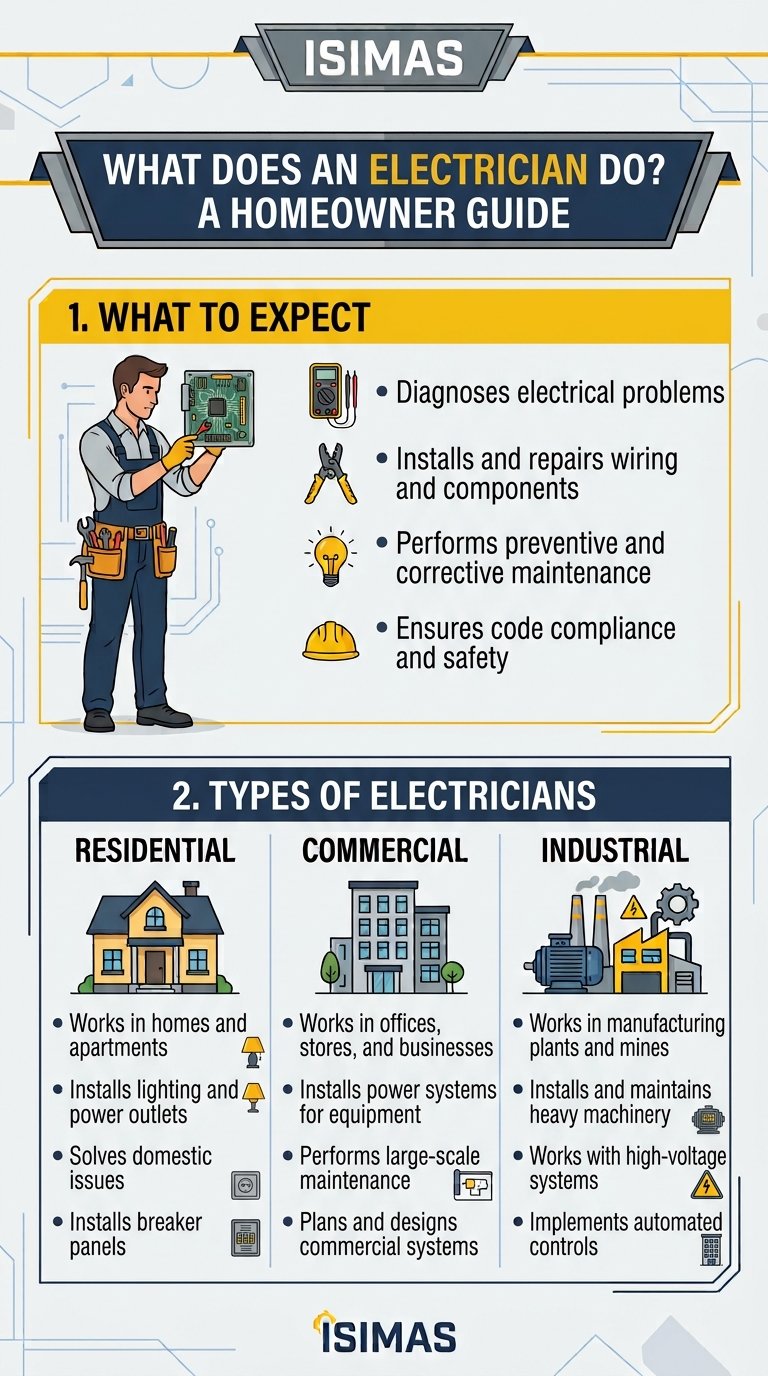
An electrician installs, troubleshoots, repairs and inspects the wiring, panels, outlets and fixtures that make a building’s electrical system work safely.
Core duties include placing and connecting wiring and circuit breakers, using testing devices to diagnose faults, repairing or replacing damaged components, and making sure all work follows the National Electrical Code.
Most electricians specialize in either residential work, like panel upgrades and ceiling fan installs, or commercial and industrial work involving heavier equipment and larger systems.
Core duties of an electrician
Four responsibilities make up most of what an electrician does on a given day.
Install systems
This means placing and connecting wiring, conduits, circuit breakers, outlets and light fixtures based on blueprints, whether for new construction or an addition to an existing property.
Troubleshoot issues
Electricians use testing devices like multimeters to find electrical faults and figure out why a circuit trips, a fixture fails, or power drops in part of a building.
Repair and replace
This covers fixing or swapping out damaged wiring, faulty switches, broken panels and worn out equipment once the underlying cause has been identified.
Inspect and comply
Electricians check components like transformers and breakers to confirm everything follows local building rules and the National Electrical Code, both during new work and on existing systems.
How electricians diagnose problems
Troubleshooting is less about guessing and more about a repeatable process.
An electrician typically starts by asking what changed right before the problem started, then narrows the search using a multimeter or voltage tester to check specific circuits, outlets or components.
Once the fault is located, the fix might be as simple as tightening a loose connection or as involved as replacing a section of wiring or an entire breaker.
This is why two electricians visiting the same home for a flickering light might reach very different diagnoses. Experience shapes how quickly they narrow down the actual cause.
Licensing levels, apprentice journeyman master
Not every electrician is qualified for the same scope of work, and the licensing tier explains why.
An apprentice works under supervision on basic tasks while completing the hands on training required to advance.
A journeyman has completed that training and is licensed to work independently on standard residential and light commercial tasks.
A master electrician has the most experience and is qualified to design and oversee complex electrical layouts, take on larger commercial jobs, and pull the legal permits required for major work.
Residential electricians
Residential work covers the electrical systems inside houses and apartments, and it is often the most varied type of electrical work day to day.
A residential electrician might upgrade an outdated panel in the morning, install a ceiling fan after lunch, and wire an EV charger by the end of the day, all in different homes.
Much of this work also involves explaining the issue clearly to a homeowner who may not have any electrical background, which makes communication as important as technical skill.
Commercial and industrial electricians
Commercial and industrial electrical work operates at a different scale entirely.
A commercial electrician handles heavy equipment, switchgear, transformers and complex conduit systems in offices, retail stores and restaurants, where three phase power and higher loads are the norm rather than the exception.
Industrial electrical work goes further still, often involving factory equipment, large scale power distribution and systems where downtime carries a direct cost to the business.
What an electrician does beyond wiring
Modern electrical work increasingly overlaps with low voltage systems that used to belong to a separate trade.
Many electricians now also handle security camera installation, fire alarm systems and access control systems, since all three rely on the same wiring and panel infrastructure as the rest of a building’s electrical system.
For a property owner, this means one licensed provider can often handle a wider scope of work than the word electrician traditionally implies.
When to call an electrician versus handling it yourself
A few situations clearly call for a licensed professional rather than a DIY attempt.
- Any work that involves opening or modifying the service panel
- Diagnosing a breaker that trips repeatedly or will not stay reset
- Running new wiring through walls, attics or crawl spaces
- Any burning smell, sparking or visible scorch marks
- Adding a dedicated circuit for a major appliance or EV charger
For genuine emergencies, like an active spark or burning smell, Isisma Electric’s emergency electrician service is available around the clock.
How Isisma Electric puts this to work in Orlando
Isisma Electric has served residential, commercial and industrial properties across Central Florida since 2019, with licensed electricians handling everything described above under one team.
You can read more about the company’s background on the about us page, see completed work on the projects page, or check the specific communities covered on the service areas page.
If you have a project or issue that fits any of what an electrician does, request a free estimate or call (407) 653 9210.
Frequently asked questions
What is the main job of an electrician?
An electrician installs, maintains and repairs the wiring, panels, outlets and fixtures that make a building’s electrical system function safely and to code.
What is the difference between a journeyman and a master electrician?
A journeyman is licensed to work independently on standard tasks, while a master electrician is qualified to design and oversee complex systems and pull permits for major work.
Do electricians only work on wiring?
No. Many electricians also handle related low voltage systems, including security cameras, fire alarms and access control, since these rely on similar wiring and panel work.
When should I call an electrician instead of doing it myself?
Call a professional for anything involving the service panel, repeated breaker trips, new wiring runs, or any sign of burning, sparking or scorching.
The bottom line on what an electrician does
An electrician’s job comes down to four things, installing systems, troubleshooting problems, repairing what is broken and making sure it all meets code.
The scale changes a great deal between a single home outlet and a factory floor, but the core skill set, testing, diagnosing and fixing safely, carries across every specialization.
If your Orlando property needs any of this work done, Isisma Electric is available to diagnose the issue and recommend the right next step.