

An electrician is a skilled tradesperson who installs, maintains and repairs electrical wiring, equipment and systems in homes, buildings and machines.
The title covers a wide range of specialties, from someone wiring a new home to someone maintaining the electrical systems on a ship or inside a data center.
This guide covers what defines the role, the main types of electricians, and how it differs from related jobs like electrical technician or electrical engineer.
Quick answer for what is an electrician
An electrician is a licensed tradesperson trained to install, troubleshoot and repair the wiring, panels and equipment that deliver electricity safely throughout a building or machine.
The role splits into a few main types, residential, commercial and industrial, and specialized work on platforms like aircraft, ships or telecommunications cabling.
Electricians follow strict local and national codes, and most complete a multi year apprenticeship before earning a license to work independently.
What electricians do
At the core, electricians handle three things, installing new wiring and systems, troubleshooting problems with testing devices, and repairing or replacing damaged components.
New wiring installation follows building codes and blueprints, whether it is a new home, a commercial buildout, or an addition to an existing structure.
Troubleshooting relies on tools like multimeters to trace a fault back to its source rather than guessing at the cause of a tripped breaker or dead outlet.
For a more detailed breakdown of daily responsibilities, see our guide on what an electrician does.
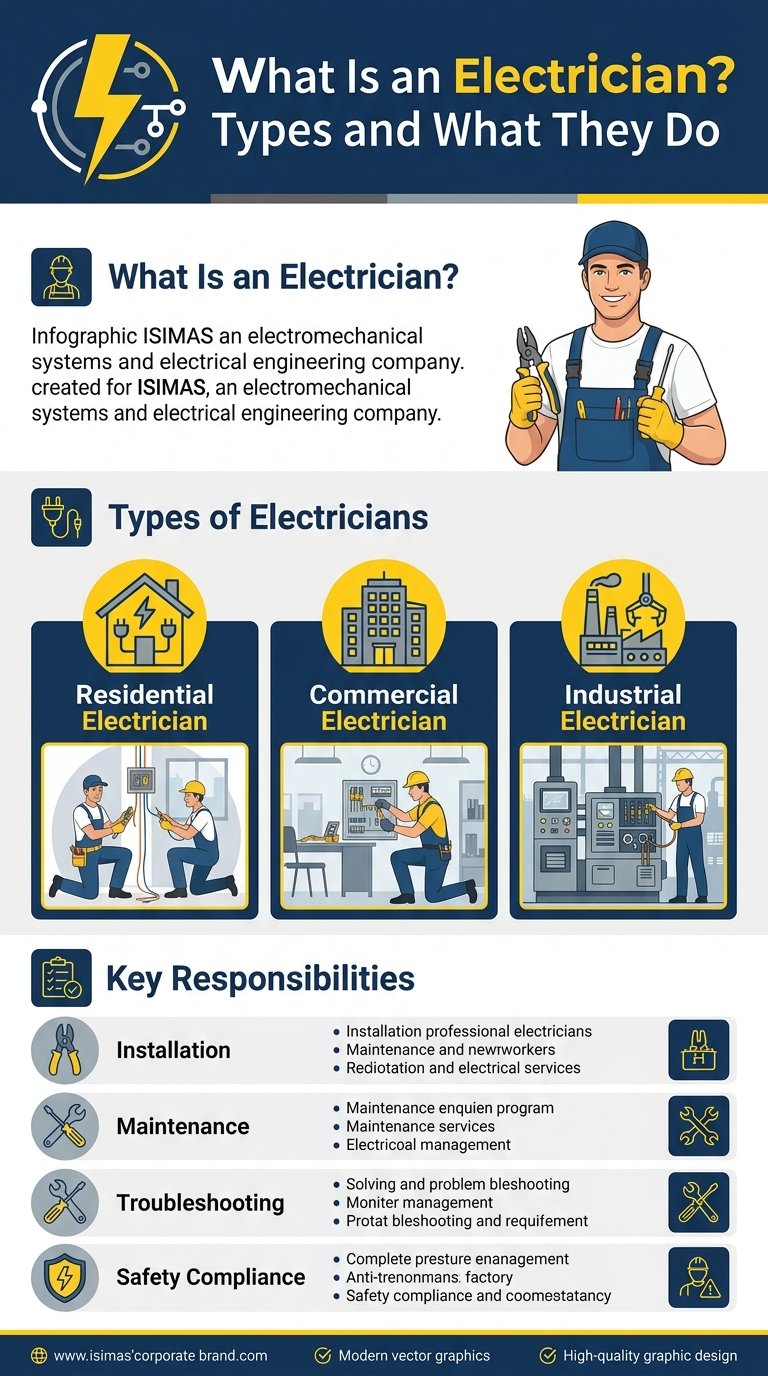
Types of electricians
The electrician title covers several distinct types of work, each with its own scope and typical setting.
Residential
Residential electricians work on houses, apartments and other living spaces, handling everything from outlet repairs to full panel upgrades and new construction wiring.
Commercial and industrial
This type covers large buildings, factories and power grids, involving heavier equipment, three phase power and systems where downtime carries a real business cost.
Specialized
Some electricians work on mobile platforms like airplanes and ships, or on the data cabling that powers telecommunications and network infrastructure, which requires training well outside standard building wiring.
Electrician vs electrical technician vs electrical engineer
These three titles get confused often, even though the training and scope differ significantly.
| Role | Typical training | Scope of work |
| Electrician | Apprenticeship plus state license | Installs, repairs and maintains wiring and systems independently |
| Electrical technician | Vocational or technical program | Assists with installation, testing and troubleshooting, often under supervision |
| Electrical engineer | Engineering degree | Designs and develops electrical systems and equipment rather than installing them |
An electrician is licensed to do the hands on installation and repair work, while an electrical technician often supports that work, and an electrical engineer designs the systems electricians and technicians build.
How someone becomes an electrician
Most electricians start with a multi year apprenticeship that combines paid on the job training with classroom instruction in electrical theory and code requirements.
After completing the apprenticeship, they qualify as a journeyman electrician, licensed to work independently on standard tasks.
With more experience, a journeyman can advance to master electrician, qualified to design complex systems, oversee larger projects and pull the permits required for major work.
Which type of electrician you need for common situations
Matching the right type of electrician to your situation saves time before you even pick up the phone.
For a home repair, panel upgrade or new fixture, a residential electrician is the right fit.
For an office, retail space or restaurant, a commercial electrician understands the heavier loads and code requirements involved.
For a factory, warehouse or manufacturing facility, industrial electrical services cover the equipment and power distribution specific to that setting.
For low voltage systems that overlap with electrical work, look for a provider who also handles security camera installation, fire alarm systems or access control systems, since these typically share the same panel and wiring infrastructure.
For an active hazard like sparking or a burning smell, an emergency electrician is the right call regardless of property type.
How Isisma Electric fits these specializations in Orlando
Isisma Electric has served residential, commercial and industrial properties across Central Florida since 2019, with licensed electricians covering the full range of work described above.
You can learn more about the team on the about us page, review completed jobs on the projects page, and check the areas served on the service areas page.
If your situation fits any of the types covered here, request a free estimate or call (407) 653 9210.
Frequently asked questions
What is the simplest definition of an electrician?
An electrician is a licensed tradesperson who installs, maintains and repairs electrical wiring and systems in homes, businesses and industrial settings.
Is an electrical technician the same as an electrician?
No. An electrical technician typically supports installation and testing under supervision, while a licensed electrician can perform that work independently.
What are the main types of electricians?
The main types are residential, commercial and industrial, along with specialized electricians who work on aircraft, ships or telecommunications and data cabling.
Do all electricians need a license?
Most states require electricians to pass a licensing exam after completing an apprenticeship before they can work independently on electrical systems.
The bottom line on what an electrician is
An electrician is defined less by a single task and more by a scope, install it, troubleshoot it, repair it, and make sure it meets code, across whatever setting the work calls for.
The type of electrician that matters for you depends entirely on the property, a home, a business, a factory floor, or a system that overlaps with security or fire safety.
If you are trying to match your situation to the right type of electrician in Orlando, Isisma Electric can help you figure out exactly what the job needs.